
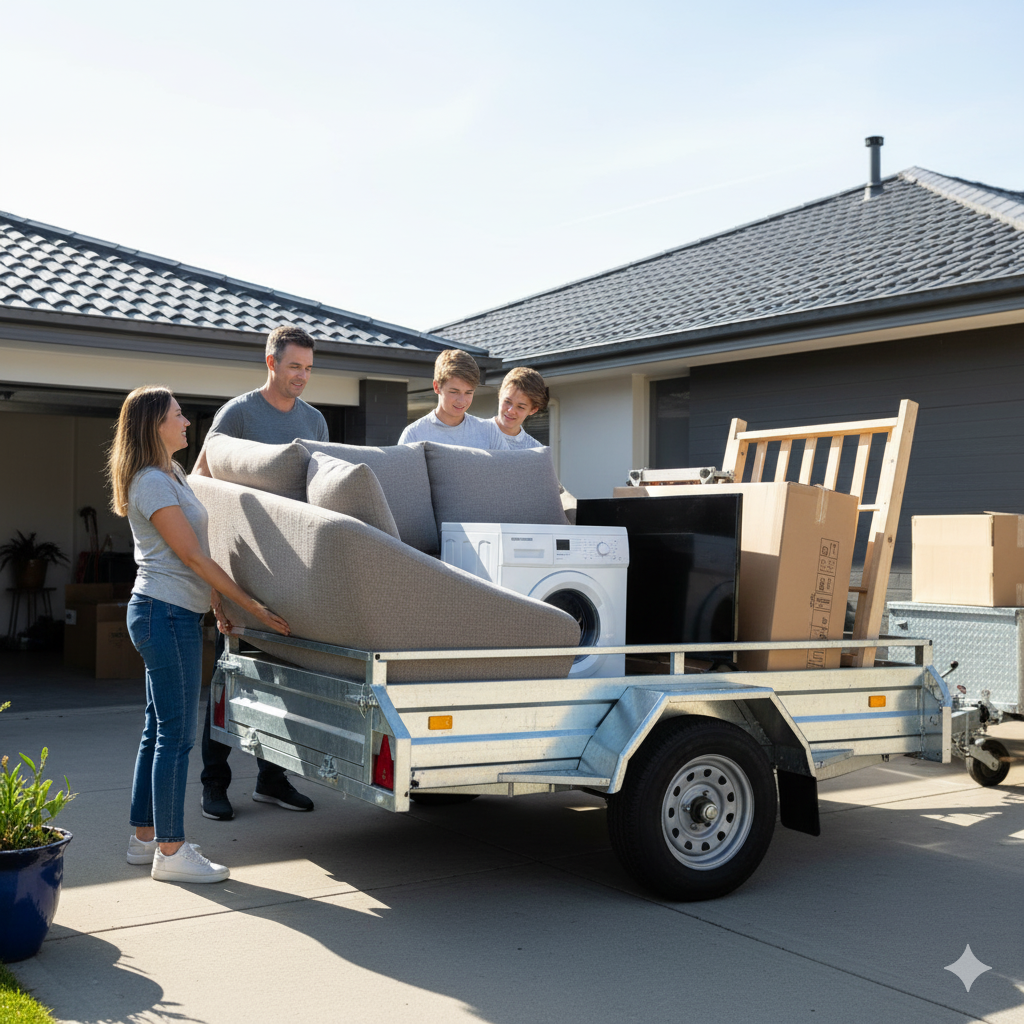

Whether you’re hauling building supplies to a job site, moving a boat to the ramp, or shifting furniture across town, the right trailer makes the job faster, safer, and a lot less stressful. Yet trailers are often an afterthought—bought once and barely thought about again until something goes wrong on the highway. This guide covers the essentials: the main types of trailers, how to match one to the job, the maintenance habits that keep you out of trouble, and the safety and towing practices every driver should know before hitting the road.
1. Types of Trailers and What They’re Best For
Not all trailers are created equal, and choosing the wrong one can quickly turn a simple job into a frustrating experience.
- Box trailers – The all-rounder. Ideal for rubbish removal, moving house, green waste, and general hardware runs.
- Flatbed (Flat-top) trailers – Perfect for oversized or awkward loads such as pallets, machinery, and building materials.
- Tandem trailers – Featuring two axles for greater load capacity and improved stability, making them ideal for tradies and heavier equipment.
- Car trailers – Purpose-built with ramps and tie-down points for transporting vehicles, ride-on mowers, and other wheeled equipment.
- Enclosed trailers – Fully covered and lockable, providing excellent protection from weather and theft for tools, motorbikes, and valuable cargo.
- Tipper trailers – Equipped with hydraulic or manual tipping systems, making it easy to unload soil, mulch, gravel, and construction waste.
Tip: Choose a trailer that suits your most frequent tasks. It’s often more cost-effective to hire a specialised trailer for occasional jobs than to own one that’s oversized for everyday use.
2. Common Uses Across Work and Everyday Life
Trailers are incredibly versatile and useful across a wide range of applications:
- Trade and construction – Transporting tools, materials, and equipment between worksites.
- Landscaping and gardening – Carrying green waste, mulch, soil, and plants.
- Recreation – Towing boats, jet skis, camping gear, or motorbikes.
- Moving and storage – Relocating furniture and household items without hiring a truck.
- Agriculture – Hauling feed, equipment, and farm supplies.
- Events and markets – Using enclosed trailers as mobile storage or event setups.
If you only need a trailer occasionally, hiring is often the most economical option. For frequent use, however, owning a trailer can provide long-term convenience and value.
3. Maintenance: Keeping Your Trailer Roadworthy
Routine maintenance not only extends the life of your trailer but also helps prevent breakdowns and improves road safety.
- Tyres – Check tyre pressure and tread depth regularly. Trailer tyres often deteriorate due to age rather than wear.
- Wheel bearings – Inspect and repack annually, or sooner if you notice unusual noise or vibration.
- Lights and wiring – Test all lights before every trip and inspect plugs for corrosion or damage.
- Coupling and safety chains – Ensure they are secure, free from excessive wear, and correctly connected.
- Suspension and springs – Check for cracked leaf springs, worn shackles, or damaged components.
- Rust and structural integrity – Regularly inspect the chassis and floor, particularly if the trailer is used near coastal areas or for corrosive materials.
Rule of thumb: If you wouldn’t skip servicing your tow vehicle, don’t neglect your trailer. Both play an equally important role in keeping you safe on the road.
4. Essential Safety and Towing Tips
Even a well-maintained trailer can become dangerous if it’s loaded or towed incorrectly.
- Know your limits – Never exceed your vehicle’s towing capacity or the trailer’s Aggregate Trailer Mass (ATM).
- Load correctly – Position approximately 60% of the load forward of the trailer axle(s) to maintain stability.
- Secure every load – Use appropriately rated tie-down straps and recheck them after the first few kilometres.
- Distribute weight evenly – Uneven loads are one of the leading causes of trailer sway.
- Monitor tow ball weight – Ensure it falls within your vehicle manufacturer’s recommended range.
- Perform a pre-trip inspection – Check tyres, lights, coupling, safety chains, and load security before every journey.
- Drive to the conditions – Allow greater braking distances, reduce speed through corners, and anticipate traffic changes earlier.
5. Trailer Industry Trends
The trailer industry continues to evolve with new technology and improved materials.
- Lighter, stronger materials – Aluminium and high-tensile steel designs reduce weight while maintaining durability.
- Advanced braking systems – Electric and hydraulic braking systems are becoming increasingly common on medium-sized trailers.
- Off-road adventure trailers – Growing demand for independent suspension trailers designed for camping and remote travel.
- Sustainability – Manufacturers are increasingly focusing on recyclable materials and longer-lasting components to reduce environmental impact.
Final Thoughts
Choosing the right trailer, maintaining it properly, and following safe towing practices can make every job safer, easier, and more efficient.
Whether you’re a tradie, a homeowner tackling a weekend project, or an outdoor enthusiast heading off on your next adventure, investing a little time in selecting and maintaining the right trailer will pay off every time you hit the road.
Need help choosing the right trailer for your next job or arranging a trailer service? Contact our team today—we’re always happy to help you find the right solution.
0 Comment