

Jobs Australians Hire a Trailer For (That Have Nothing to Do With Moving House)
Ask most people what a trailer’s for and you’ll get the same answer: moving house, or a tip run. Fair enough, those are the obvious ones. But spend a week behind a hire desk and you’ll see trailers going out the gate for jobs that have nothing to do with either, everything from market stalls to motorbikes to someone’s mate’s boat.
Spring’s exactly when this variety shows up. Gardens are getting cleared, footy finals season has clubs shifting gear between grounds, and market season is back in full swing. If you’ve only ever thought of a trailer as a “moving” tool, here’s what else people are actually using them for, and which trailer suits which job.
Around the Home and Garden
This is where most people’s trailer experience starts, but it rarely stops at moving boxes.
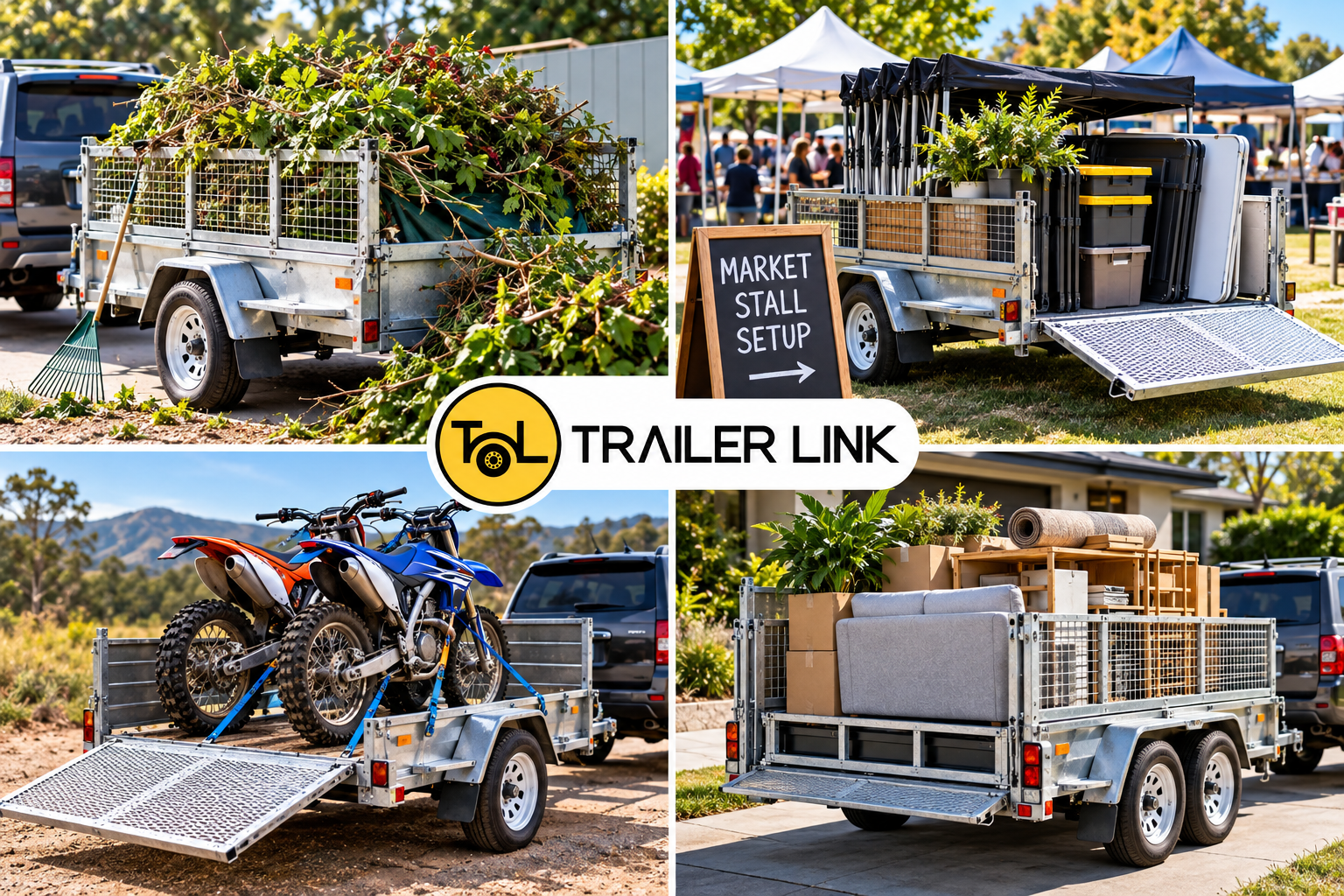
- Green waste and garden clean-ups – Spring pruning, hedge trims, and the pile of clippings that’s been growing behind the shed all winter. A box trailer to the tip beats ten trips in the back seat.
- Mulch, soil, and pavers – Landscaping supply yards will load a trailer far faster than they’ll fill your boot, and you won’t be vacuuming potting mix out of the carpet afterwards.
- Garage and shed declutters – Old furniture, broken appliances, the exercise bike nobody uses. One trailer load to the tip or the verge collection point clears more than a car ever could.
- Renovation offcuts and rubble – Small reno and DIY jobs generate more waste than people expect, and a cage or high-side trailer handles it without things bouncing out on the way.
Side Hustles and Small Business
Plenty of small operators run their entire business off the back of a hired trailer, at least until they’re busy enough to justify owning one.
- Market stalls and pop-up shops – Fold-out tables, marquees, stock crates. A flat-top or box trailer turns a Saturday market stall into a two-trip job instead of a five-trip one.
- Mobile trades – Landscapers, handymen, and small building crews hiring an extra trailer for a big job rather than tying up their own gear.
- Catering and event food vans – Extra fridges, urns, tables, and equipment that won’t fit in the van on a big event day.
- Furniture and reselling side hustles – Anyone buying and flipping furniture or whitegoods off Marketplace needs a trailer more often than they need a ute.
Recreation and Getting Out of Town
Trailers aren’t just a chore vehicle. A lot of hires are purely about having a better weekend.
- Motorbikes and quad bikes – A caged or flat trailer gets dirt bikes to the track without putting kilometres and mud on the road-registered ones.
- Boats and jet skis – Not everyone owns a dedicated boat trailer, especially for a boat that only comes out a few times a year.
- Camping and four-wheel-drive gear – Camper trailers and cage trailers loaded with everything that won’t fit in the vehicle for a long weekend away.
- Sporting and hobby equipment – Kayaks, bikes for a group ride, gear for a weekend competition. Cheaper than a roof rack system you’ll use twice a year.
Community Events and One-Off Favours
Some of the most reliable seasonal demand isn’t from individuals at all, it’s from clubs, schools, and communities.
- Footy and netball club gear – Finals season means shifting goalposts, canteens, and equipment between grounds, often on short notice.
- School fetes and fundraisers – Marquees, trestle tables, and donated goods need moving in bulk for a single day.
- Charity and clothing drives – Bulk pickups that would otherwise take several car trips in one go.
- Helping a mate move, without owning a trailer yourself – Still the classic, but increasingly it’s a hired trailer doing the favour, not someone’s own rig.
Matching the Job to the Right Trailer
Once you know what you’re actually moving, picking a trailer type is quick.
Job – Trailer type
Green waste, furniture, general junk – Box trailer
Mulch, soil, rubble – Cage or high-side trailer
Motorbikes, quads, ride-on mowers – Flat-top or caged trailer
Boats, jet skis – Purpose-built boat trailer
Market stalls, event gear – Flat-top or enclosed trailer
Heavy loads, longer distances – Tandem axle trailer
Before you hitch up, a 60-second check: confirm the tow ball size matches your vehicle, test all the lights before you leave the yard, and check your tow vehicle’s rated capacity against the trailer plus load, not just the trailer alone. It’s the same three things worth checking no matter what’s going in the back.
The Trailer Hire Trend Worth Knowing About
More Australians are choosing to hire for occasional jobs rather than buy and store a trailer that sits idle most of the year. It adds up: a trailer you use four times a year costs more to insure, register, and store than it does to simply hire when you need it, and you’re never stuck with the wrong type for the job in front of you.
The Short Version
Trailers earn their keep well beyond the big move. Garden clean-ups, side hustles, weekend adventures, and club events all lean on the same handful of trailer types, borrowed rather than owned. Work out what you’re actually loading, match it to the table above, and the rest is a five-minute pickup.
Got a job that doesn’t fit the usual “moving house” mould? Browse box, cage, flat-top, boat, and tandem trailers near you on TrailerLink, or get in touch with our team and we’ll match you to the right one.
0 Comment