
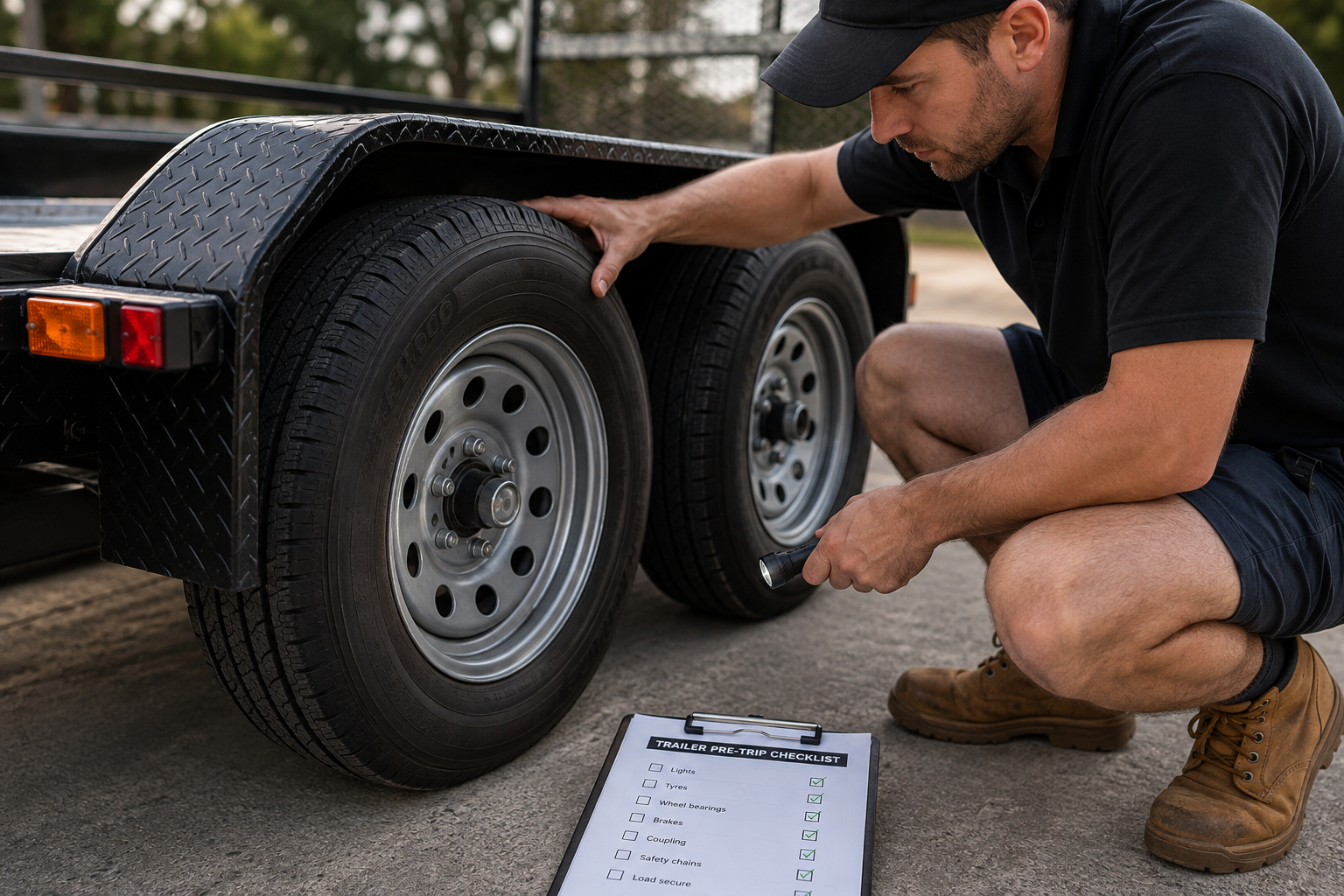

A wheel bearing doesn’t fail on a Tuesday afternoon in your driveway. It fails at 90 km/h on the freeway, usually on a long weekend and usually a long way from a mechanic. Almost every roadside trailer disaster was preventable: a five-minute check that got skipped too many times.
Most people treat trailer maintenance like flossing. They know they should, they mean to, and then six months go missing. The good news is it doesn’t take much time. It just takes a system. Here’s what that system looks like, what happens if you skip it, and where hiring instead of owning takes the whole problem off your plate.
Why Skipping Trailer Maintenance Costs More Than You’d Think
Trailer neglect rarely shows up as one big failure. It shows up as a slow pile-up of small problems, each making the next one worse.
- Bearings run dry, then run hot, then seize. A wheel bearing that hasn’t been greased in a couple of years doesn’t just get noisy. It can lock up entirely, and at that point you’re not looking at a $40 service. You’re looking at a new hub, possibly a new axle, and a tow truck bill on top.
- Tyres perish from the inside out. A trailer tyre can look fine and still be years past safe, especially if the trailer spends most of its life parked. Sun-cracked sidewalls can fail without warning, often at highway speed.
- Corrosion spreads while nobody’s looking. A trailer stored outside, especially near the coast, can develop rust in the chassis and wiring loom long before it’s visible on a casual glance.
- Small electrical faults become no-go faults. A dodgy earth or corroded pin might cause one flickering indicator today. Left alone, it can take out your whole lighting circuit, and an unroadworthy trailer can turn a quick job into a fine.
- Unserviced brakes wear unevenly. If your trailer has electric or override brakes, a skipped service doesn’t just risk failure. It can cause the trailer to pull sideways under hard stops.
None of this is really about the trailer. It’s about what’s attached to the other end of it: your tow vehicle, your cargo, and everyone else on the road.
A Trailer Maintenance Calendar You Can Actually Stick To
The trick isn’t doing more. It’s doing the right small things at the right intervals, so nothing gets time to turn into a bigger problem.
Before every trip (five minutes, no tools required)
- Walk around and check tyre pressure and tread by eye.
- Plug in and test every light: indicators, brakes, tail lights, and number plate light.
- Confirm the coupling is locked down and the safety chains are crossed and connected.
- Give the load a shake once it’s strapped down. If it moves, it’s not secure.
Monthly, or after any big or wet job
- Grease the jockey wheel, hinges, and any other moving parts.
- Check brake adjustment if the trailer is brake-equipped.
- Hose off mud, sand, or salt, especially after a trip to the beach or a building site.
- Look underneath for anything that’s started to rust or work loose.
Every 12 months (or sooner for hard use)
- Have wheel bearings inspected and repacked. Non-negotiable if the trailer has been near water.
- Get brakes professionally checked and adjusted.
- Replace tyres showing cracking or perishing, regardless of tread depth.
- Check registration, compliance plate details, and any state-specific inspection requirements.
Stick a reminder in your phone for the monthly and annual checks. The five-minute pre-trip habit is the one that actually stops breakdowns. Treat it like checking your mirrors, not an optional extra.
Trailer Maintenance Warning Signs You Shouldn’t Wave Off
Some symptoms are your trailer telling you something is already wrong, not something that might go wrong later.
- A humming or grinding noise from a wheel almost always means a bearing is on its way out. Get it looked at before your next trip, not after.
- A trailer that sways more than usual can point to uneven tyre pressure, an unbalanced load, or worn suspension components. Don’t just put it down to wind.
- Lights that work sometimes and not other times usually point to a wiring or earth fault, and it won’t fix itself.
- A coupling that feels loose or notchy, rather than locking in with one solid motion, needs attention before it’s trusted with a load again.
- Visible rust on the chassis, particularly around welds, should be checked by someone who can tell surface rust from structural rust.
Catch any of these early and the fix is usually cheap and quick. Leave them, and every one gets more expensive.
DIY Trailer Maintenance or Call a Professional?
A good rule of thumb: if it’s something you check, you can usually do it yourself. If it’s something you adjust or replace, it’s often worth calling a professional.
- Fine to DIY: tyre pressure, visual inspections, greasing accessible parts, testing lights, and cleaning plugs and connectors.
- Better left to a professional: repacking bearings, brake servicing and adjustment, welding or chassis repairs, and anything involving electric brake controller wiring.
If you’re not confident diagnosing a fault, a quick check from a trailer mechanic is a lot cheaper than guessing wrong and finding out on the road.
Or Skip the Whole Job: Hire a Trailer Instead
Here’s the thing about all of the above: it only applies if you own the trailer. Every trailer in the TrailerLink fleet is serviced, inspected, and checked before it ever gets hitched to your car. Bearings, brakes, tyres, lights, the lot.
You don’t need a maintenance calendar, a grease gun, or a reminder in your phone. You just hitch up and go.
For a one-off job, a tip run, a house move, or hauling something home from the hardware store, that’s the whole appeal of trailer hire. You get a trailer that’s been properly looked after, use it for exactly as long as you need it, and hand the maintenance back along with the trailer.
The Bottom Line
Trailer maintenance isn’t complicated, but it does need to actually happen. A five-minute pre-trip check, a monthly once-over, and an annual service can catch almost everything before it turns into a breakdown, a fine, or a much bigger bill.
If you’d rather skip the upkeep altogether, that’s exactly what hiring is for.
Need a trailer that’s already sorted? Get in touch with our team. Every trailer we hire out is checked, serviced, and ready to go, so the only thing you need to worry about is what you’re loading into it.
0 Comment