
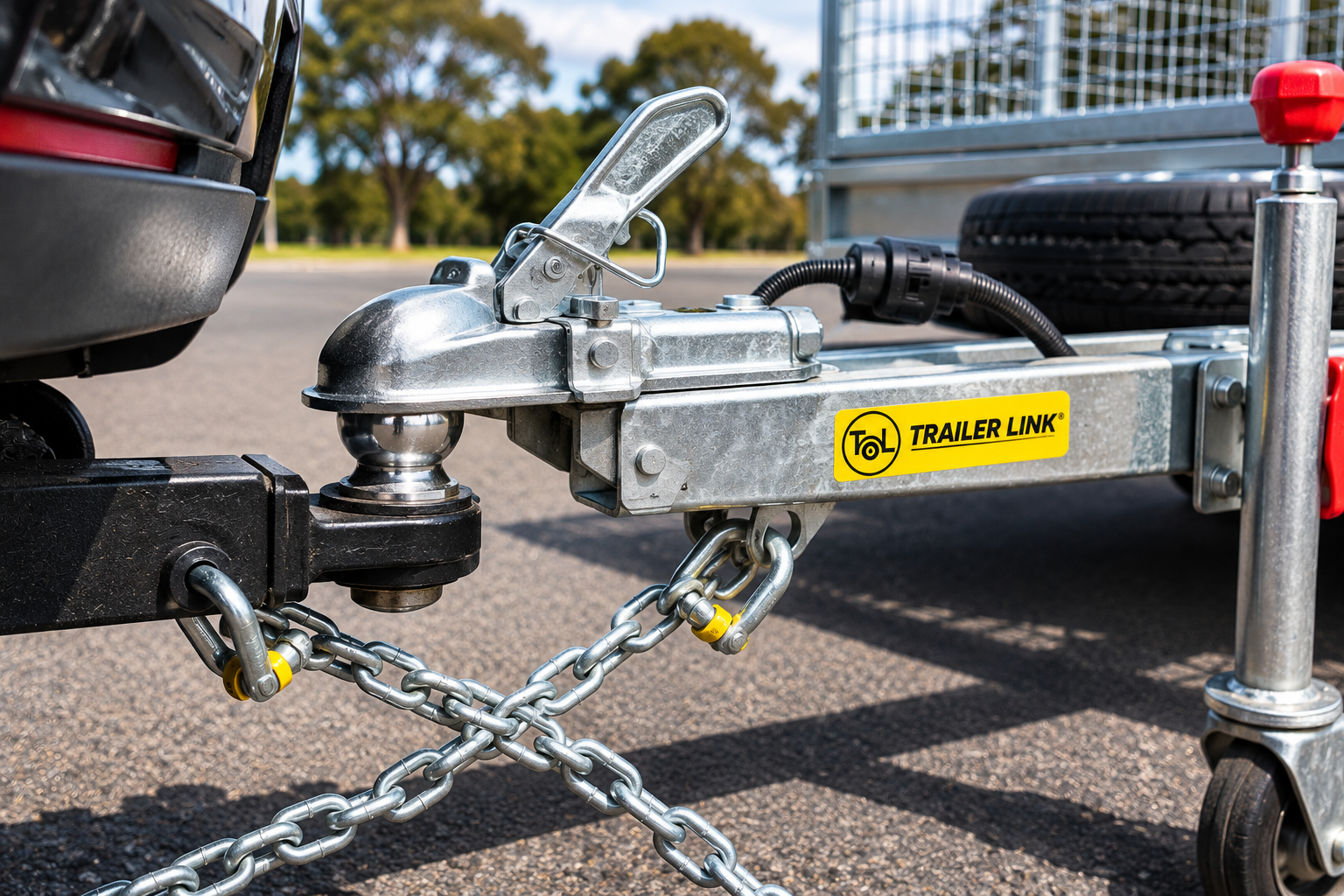

Most trailer dramas start before the wheels turn. A coupling that didn’t lock. A shackle off a hardware shelf. A tow ball nut that worked loose over 6 months. All of it happens in the 2 minutes at the back of the car.
Here’s how to hook up properly, what the stamps on your gear mean, and the one test that tells you it’s actually on.
Know What’s Bolted to Your Car
Before you hitch anything, look at what you’re towing with.
- Tow bar plate. Every tow bar has a compliance plate or sticker. It shows the max towing weight and the max ball weight. Your trailer’s loaded weight has to sit under both.
- Tow ball size. Light trailers in Australia use a 50mm ball. The size and rating should be stamped on the ball itself. If you can’t read a stamp, don’t trust it.
- Tow ball rating. A ball stamped 2300kg on a tow bar rated 3500kg means your limit is 2300kg. The lowest number in the chain wins.
- Tongue height. Tow bar tongues come with different drops and rises. Pick the one that keeps the trailer sitting level, or a touch nose-down, when it’s loaded.
Coupling Types You’ll Come Across
Not every trailer hooks up the same way.
- Ball coupling. The standard on box trailers, cage trailers and most car trailers. A cup sits over the ball and a latch locks under it.
- Off-road couplings. Poly blocks and articulating hitches, common on camper trailers. They need a different tow bar fitting, not a ball.
- Pintle or ring hitch. Mostly farm and heavy gear. You’ll rarely see one on a hire trailer.
If you’re hiring, ask what coupling the trailer has when you book. Rocking up with the wrong setup is a wasted trip.
Hitching Up: Step by Step
- Back up straight. Get the ball under the coupling, with the coupling wound up high enough to clear it. A spotter helps.
- Lower it on. Wind the jockey wheel down until the coupling sits fully over the ball.
- Lock the latch. Push the handle or lever fully down, then fit the safety pin or clip. No pin, no go.
- Do the lift test. Wind the jockey wheel down a few more turns. The back of the car should rise slightly. If the coupling pops off the ball, it wasn’t locked. Start again.
- Stow the jockey wheel. Wind it right up, swing it back and clamp it tight. Remove it if it’s the clamp-on kind and could drop on a bump.
- Chains on. Covered below, because people get this wrong more than anything else.
- Plug in. Push the plug fully home and check the cable has slack for turns but can’t drag on the road.
- Handbrake off. Sounds obvious. Ask anyone who’s driven 200m with it on.
Safety Chains and Shackles: Get These Right
The chains are what keep the trailer with you if the coupling lets go.
- Rated shackles only. Use shackles stamped with a rating that suits the trailer. A cheap unrated D-shackle can snap under the shock load.
- Cross the chains. Run them in an X under the coupling. If the coupling fails, the crossed chains catch the drawbar like a cradle.
- Right length. Enough slack for full-lock turns. Not so much that they drag and throw sparks.
- Count them. Light trailers up to 2500kg need at least one chain. Above 2500kg you need two. Most hire trailers come with two anyway, so use both.
- Close the shackle pin. Screw it in finger-tight and check it at your first stop.
The 30-Second Walk-Around
Once it’s hooked up, take one lap of the car and trailer.
- Latch down and pin in
- Jockey wheel up and locked
- Chains crossed, shackles done up
- Plug in, lights checked with a second person (indicators, brake lights, tail lights)
- Trailer sitting level, not nose-up
- Load strapped, tailgate pinned
- Tow ball nut tight (give it a check every few months if the ball stays on the car)
Do the same lap at your first stop. Things settle in the first 10 to 20km.
Unhitching Without Dramas
Taking it off is where people get hurt, mostly from a trailer rolling or tipping.
- Park on flat ground and chock a wheel if you’ve got chocks
- Drop the jockey wheel and take the weight before you release the latch
- Unplug before you unchain, then unchain before you lift off
- Never stand between the car and the trailer while it’s being moved
The Short Version
Check your tow bar plate and ball stamp, lock the latch and pin it, do the lift test, cross your chains on rated shackles, and walk around it before you drive. It takes 2 minutes and it’s the difference between a trailer that follows you and one that overtakes you.
Every TrailerLink trailer goes out with its coupling, chains and plug checked. If you’re unsure about hooking up, ask us at pickup and we’ll walk you through it. Book your trailer online and we’ll have it ready to go.
0 Comment